Physical Address
304 North Cardinal St.
Dorchester Center, MA 02124
Physical Address
304 North Cardinal St.
Dorchester Center, MA 02124

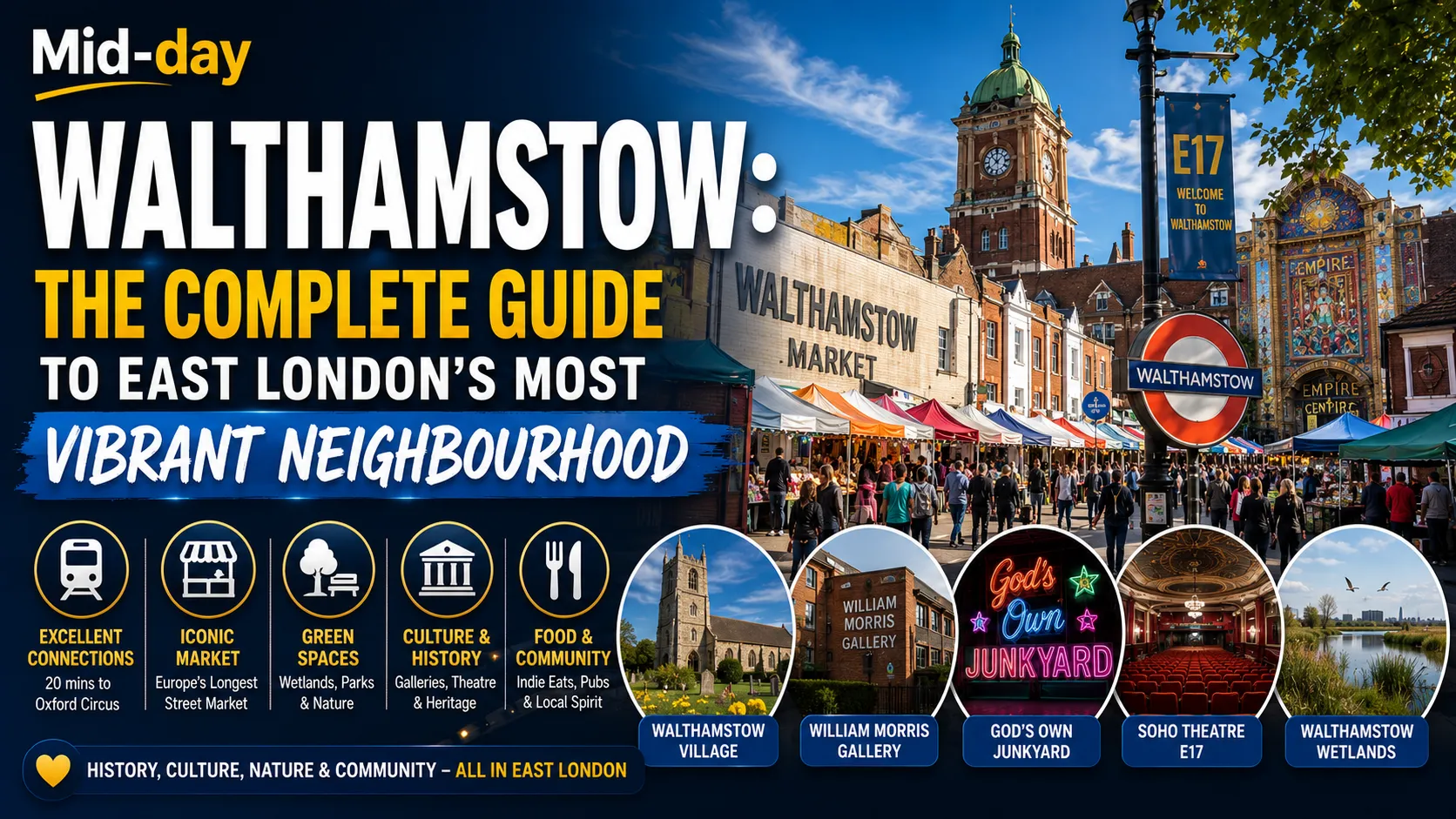
Walthamstow has undergone one of the most remarkable transformations in recent London history. What was once simply known as the end of the Victoria Line has become one of the capital’s most desirable places to live and visit. The Sunday Times has repeatedly named it among the best places to live in London, and for good reason.
This guide covers everything you need to know about Walthamstow. Whether you are planning a visit, considering a move, or simply curious about what makes E17 so special, you will find practical information, local insights, and honest advice throughout.
Walthamstow is a town in the London Borough of Waltham Forest, located in northeast London. It sits approximately 7.5 miles (12 kilometers) northeast of Central London. The town borders Chingford to the north, Snaresbrook and South Woodford to the east, Leyton and Leytonstone to the south, and Tottenham to the west.
The area is in Zone 3 on the London Underground, making it a popular choice for commuters who want reasonable property prices without sacrificing access to the city.
Walthamstow’s history stretches back more than 900 years. A record from around 1075 mentions the settlement as “Wilcumestowe,” which translates roughly to “Welcome Place.” Originally part of the Becontree Hundred of Essex, the town remained a rural parish for centuries.
The 19th century brought dramatic change. As London expanded outward, Walthamstow grew rapidly, transforming from a village into a suburban town. The arrival of the railway in the 1850s accelerated this growth, making it easier for people to commute into the city.
Walthamstow became an urban district in 1894 and a municipal borough in 1926. It remained part of Essex until 1965, when it became part of the newly created London Borough of Waltham Forest.
The town’s industrial heritage is still visible today. The Walthamstow Reservoirs, now part of the Walthamstow Wetlands nature reserve, were built by the East London Waterworks Company between 1853 and 1904. These supplied drinking water to a growing London population and remain operational today.
One of Walthamstow’s biggest selling points is its excellent transport connectivity. The area is served by five railway stations.
Walthamstow Central is the main hub, offering Victoria Line services that reach Oxford Circus in about 20 minutes. The station also provides London Overground services to Liverpool Street, also taking around 20 minutes. The Victoria Line is London’s fastest underground line, making the journey from one end to the other in just 35 minutes.
Blackhorse Road station also offers Victoria Line and Overground services, providing another convenient option for commuters. Wood Street and St. James Street stations are on the Overground line from Liverpool Street.
Numerous bus routes serve the area, and the North Circular Road (A406) runs along the northern edge of the town, providing road access to other parts of London.
Walthamstow is a large neighborhood, so it helps to pick an area to explore and discover it on foot. Local buses are available, though they can get stuck in traffic during busy periods. Cycling is becoming increasingly popular, with the Lee Navigation providing a traffic-free route for cyclists and walkers.
Walthamstow Market is the longest outdoor street market in Europe. It stretches approximately one kilometer along the High Street and has been running since 1885.
The market operates Tuesday to Friday from 8am to 5pm and Saturday from 8am to 5.30pm. With around 500 stalls, you will find everything from fresh produce and clothing to household goods and fabrics. The market reflects London’s multicultural character, with stalls catering to diverse communities and offering products from around the world.
On Sundays, the Town Square hosts a farmers’ market from 10am to 2pm, featuring fresh meat, fish, organic produce, and baked goods.
Walthamstow Village is the oldest part of the town, designated a Conservation Area in 1967. The area centers on St. Mary’s Church, which was founded in the 12th century.
The village feels like a world away from the busy High Street. Orford Road is the main thoroughfare, lined with independent cafes, restaurants, pubs, and boutiques. The Nag’s Head and The Queens are popular pubs, and you will find independent bakeries and delis dotted throughout.
Across the road from St. Mary’s Church is The Ancient House, a 15th-century timber-framed hall house that was restored in 1934 and again in 2002. Nearby almshouses date from the 16th and 18th centuries.
The William Morris Gallery is the only public museum devoted to the life and work of William Morris, the influential Arts and Crafts designer and socialist. It is located in Water House, a Grade II* listed Georgian mansion that was Morris’s family home from 1848 to 1856.
The building was constructed in 1762 and became a museum in 1950. The gallery holds over 10,000 objects, including original designs, textiles, wallpapers, furniture, stained glass, ceramics, and books.
The permanent exhibition is divided into nine rooms covering different aspects of Morris’s life and work. The grounds of the building are Lloyd Park, a public park with tennis courts, a skate park, and plenty of space for picnics. Entry to the gallery is free.
Walthamstow Wetlands is a 211-hectare (520-acre) nature reserve and one of the largest urban wetland nature reserves in Europe. It is a fully operational Thames Water site that supplies water to 3.5 million people.
The site consists of ten reservoirs built between 1853 and 1904. It is designated as a Site of Special Scientific Interest (SSSI) and a Ramsar wetland of international importance.
Birdwatchers will find plenty to enjoy. Winter brings huge numbers of wildfowl, including pochards, tufted ducks, and gadwalls. Spring is an important breeding season for grey herons and little egrets. Kingfishers and peregrine falcons can be seen throughout the year.
The site is open to the public and free to enter. There is a visitor center with refreshments and a gift shop. Parking is available off Ferry Lane or Forest Road. Note that dogs are not allowed on the reserve to protect wildlife.
God’s Own Junkyard is a fascinating neon art museum housed in an industrial estate. The collection was started by the late Chris Bracey, who made neon signs for Soho sex shops before moving into art.
The space is filled with wall-to-wall neon signs, lights, and artworks. It has become one of Walthamstow’s most Instagrammable attractions and draws visitors from across London.
The former Granada cinema on Hoe Street opened in 1930 and featured stunning Art Deco interiors. The venue fell into disrepair and closed in the early 2000s. After extensive restoration, it reopened as Soho Theatre Walthamstow.
The 960-seat main theater retains many original features from the 1930s, including impressive chandeliers. The likes of The Who, Johnny Cash, The Beatles, The Rolling Stones, and Duke Ellington once performed here. Today it hosts comedy, theater, and live music.
Vestry House Museum details the history of the local area. The building has served as a workhouse and police station over the years but has been a museum since 1931. It also holds the borough’s archives and a local studies library. Entry is free.
Walthamstow Marshes offer around 36 hectares of wet meadows, reedbeds, and scrubland, providing a wild green space that contrasts with its industrial surroundings. Lloyd Park is a popular spot for weekend picnics and outdoor activities. The Blackhorse Beer Mile features local breweries, including Wild Card Brewery, and CRATE offers street food, independent shops, and co-working spaces.
Walthamstow has seen significant property price growth over the past decade. The average house price in the area is around £617,000. Terraced properties sell for an average of £754,477, while flats average £438,000.
The mix of Victorian terraces, new-build flats, and warehouse conversions means there is something for different budgets and lifestyles. Walthamstow Village is particularly sought-after, with its conservation status and cobbled streets.
Walthamstow offers a range of schooling options. Primary schools include Greenleaf Primary School, Stoneydown Park School, and Whittingham Primary Academy. Secondary schools include Walthamstow School for Girls, Kelmscott School, and Willowfield School. Many schools have received good ratings from Ofsted.
Walthamstow has a strong sense of community and is known for its creative spirit. The area is a hub for artists and makers, with spaces like God’s Own Junkyard and CRATE offering studios and co-working spaces.
The population is diverse, with the High Street area having a mix of ethnicities, including Pakistani, African-Caribbean, and other communities. Walthamstow also played a role in the early days of grime music, with artists like Lethal Bizzle hailing from the area.
Crime rates in Walthamstow vary by area. Walthamstow Central has a moderate crime rate, with approximately 81 to 85 crimes per 1,000 residents per year. The wider Waltham Forest borough has a crime rate of around 107 per 1,000 population.
As with any urban area, it pays to be aware of your surroundings, particularly at night and in quieter areas.
Walthamstow’s food scene has expanded considerably in recent years. Walthamstow Village offers cozy cafes and gastropubs, including The Nag’s Head and The Queens. The Orford Road area has become a destination for dining, with restaurants like Ruff’s Bistro.
Wood Street Indoor Market is home to vintage shops, records, and food offerings, including the vegan deli The Coven of Witches. Crate Foodhall offers street food and drinks in a converted industrial space.
Turkish and Mediterranean cuisine is well represented, with Yasar’s Kitchen among the popular options. Raya Asian Street Food serves Southeast Asian dishes, and The Indian Lunchbox offers Indian cuisine.
The Blackhorse Beer Mile is a must for beer enthusiasts, featuring local breweries including Wild Card Brewery. Big Penny Social has become a popular nightlife destination, hosting events with performers, circus acts, and orchestras.
Walthamstow hosts a variety of events throughout the year. The Walthamstow Art Trail showcases local artists across multiple venues. The Walthamstow International Film Festival takes place at the Trades Hall.
Regular events include the Sunday farmers’ market, storytelling sessions at the library, and community activities at the Outset Centre. The Trades Hall offers a diverse program spanning tea dances to comedy.
“Walthamstow is rough and unsafe. “ While parts of the area have higher crime rates than others, Walthamstow has undergone significant regeneration. It is now considered one of London’s most desirable neighborhoods.
“There’s nothing to do there.” This is far from accurate. Walthamstow offers museums, galleries, a nature reserve, a historic village, Europe’s longest outdoor market, theaters, and a thriving food and drink scene.
“It’s too far from central London.” Walthamstow Central is about 20 minutes from Oxford Circus on the Victoria Line. It is well within commuting distance.
“It’s just for young professionals.” Walthamstow attracts families, artists, and people of all ages. Good schools, green spaces, and community feel make it popular with families, too.
Walthamstow’s transformation offers lessons in urban regeneration. The revival of the Granada cinema as Soho Theatre, Walthamstow, shows how preserving heritage buildings can anchor community renewal. The Walthamstow Wetlands demonstrates how working infrastructure can coexist with nature conservation.
The area’s creative economy has flourished thanks to affordable workspace and a supportive community. Spaces like God’s Own Junkyard and CRATE have become destinations that draw visitors from across London.
Community-led initiatives, from pop-up cinemas to urban gardening projects, have strengthened local identity. This grassroots approach has made Walthamstow feel authentic despite rapid change.
For visitors:
For those considering a move:
For new residents:
Walthamstow has earned its reputation as one of London’s best places to live. It offers a rare combination of excellent transport links, green spaces, cultural attractions, and a strong sense of community. The area has retained its character while embracing change, making it appealing to a wide range of people.
Whether you are visiting for the day, considering a move, or simply curious about this corner of East London, Walthamstow rewards exploration. The market, the village, the wetlands, and the gallery each offer something different. Together they tell the story of a town that has transformed from a rural Essex parish into a vibrant London neighborhood.
Walthamstow is not perfect. Like any urban area, it has challenges. But its strengths outweigh its weaknesses, and its future looks bright.
Is Walthamstow a nice place to live?
Yes. Walthamstow has been named one of London’s best places to live by The Sunday Times. It offers good transport links, green spaces, independent shops, and a strong community feel.
How far is Walthamstow from central London?
Walthamstow is about 7.5 miles (12 kilometers) northeast of Central London. The Victoria Line reaches Oxford Circus in about 20 minutes.
What is Walthamstow famous for?
Walthamstow is famous for Europe’s longest outdoor street market, the William Morris Gallery, Walthamstow Wetlands nature reserve, and its historic village.
Is Walthamstow on the Tube?
Yes. Walthamstow Central and Blackhorse Road are on the Victoria Line. Walthamstow Central also offers London Overground services.
What is the Walthamstow postcode?
Walthamstow’s postcode is E17.
Is Walthamstow Market open every day?
The market is open Tuesday to Saturday. Sunday hosts a farmers’ market in the Town Square.
What are the best things to do in Walthamstow?
Top attractions include the William Morris Gallery, Walthamstow Wetlands, God’s Own Junkyard, Walthamstow Village, and Soho Theatre Walthamstow.
Is Walthamstow expensive to live in?
Property prices have risen significantly. The average house price is around £617,000. However, prices remain more affordable than many other parts of London with similar transport connections.
What is the Blackhorse Beer Mile?
The Blackhorse Beer Mile is a collection of local breweries near Blackhorse Road station, including Wild Card Brewery.
Does Walthamstow have good schools?
Yes. Walthamstow has a range of primary and secondary schools, many with good Ofsted ratings.
Read More: Elmswell, Suffolk: Complete Village Guide for Visitors, Residents and Property Buyers





[…] Read More: Walthamstow Guide: Things to Do, Transport & Living in E17 […]