Physical Address
304 North Cardinal St.
Dorchester Center, MA 02124
Physical Address
304 North Cardinal St.
Dorchester Center, MA 02124

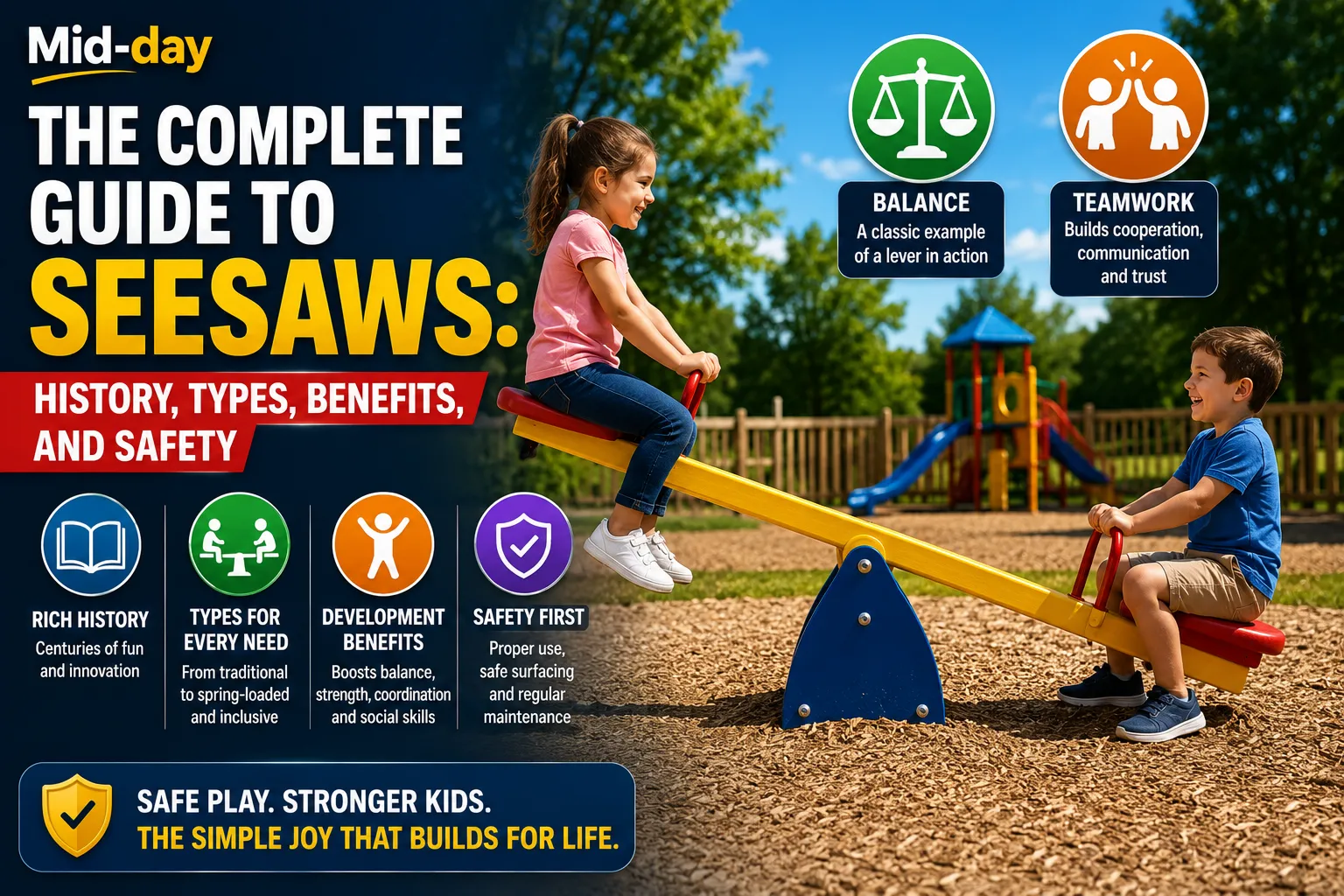
A seesaw, also known as a teeter-totter, is one of the most recognizable pieces of playground equipment in the world. It consists of a long board balanced on a central fulcrum, allowing two people to sit on opposite ends and move up and down in a rhythmic, alternating motion. This simple yet engaging device has been delighting children for centuries, teaching valuable lessons about balance, cooperation, and physics.
But the seesaw is more than just a childhood memory. It is a fundamental example of a lever in action, a tool for physical development, and a social activity that requires teamwork and communication. Whether you are a parent looking to understand the benefits of playground equipment, an educator seeking to explain physics concepts, or someone shopping for a seesaw for your backyard, this guide covers everything you need to know.
This article explores the history of the seesaw, the different types available, the developmental benefits for children, important safety considerations, and how to choose the right seesaw for your needs.
A seesaw is a playground apparatus consisting of a long plank or board balanced on a central pivot point called a fulcrum. When one person sits on one end and pushes off the ground, the other end rises, allowing the person on the opposite end to descend. The motion continues back and forth as each rider alternately pushes and relaxes.
The seesaw is a classic example of a first-class lever, where the fulcrum is positioned between the effort and the load. In this case, the effort is the force applied by one rider pushing down, and the load is the weight of the other rider. The mechanical advantage of a seesaw depends on the distance of each rider from the fulcrum and their respective weights.
The terms “seesaw” and “teeter-totter” are often used interchangeably, and for most practical purposes, they refer to the same piece of equipment. However, there are some subtle differences in usage:
In British English, “seesaw” is the standard term. Some people distinguish between the two based on design, with “seesaw” referring to a curved or shaped board and “teeter-totter” referring to a straight plank. However, in modern usage, the two words are essentially synonymous.
The seesaw has a long and fascinating history that stretches back thousands of years. The basic principle of a lever balanced on a fulcrum has been understood since ancient times.
The earliest known seesaws were not toys but practical tools. Ancient civilizations used lever mechanisms for lifting heavy objects, drawing water, and other tasks. The concept of a balanced beam was also used in various cultural rituals and games.
The seesaw as a recreational device for children likely emerged in Europe during the 17th or 18th century. Early versions were simple wooden planks placed over a log or stone. By the 19th century, seesaws became a common feature in public parks and school playgrounds.
In the 20th century, seesaw designs evolved significantly. Manufacturers began producing metal and plastic seesaws with improved safety features, such as spring-loaded mechanisms to prevent sudden drops and rubberized surfaces to reduce impact. Today, seesaws are available in a wide range of styles, from traditional wooden models to innovative designs with built-in shock absorbers.
Seesaws come in various designs to suit different settings, age groups, and safety requirements. Understanding the different types can help you choose the right one for your needs.
The traditional seesaw consists of a long wooden or metal plank balanced on a central fulcrum. It is the classic design found in most playgrounds. These seesaws typically accommodate two riders and require active participation from both ends to maintain motion.
Spring-loaded seesaws feature a coil spring or hydraulic mechanism at the fulcrum. This design provides a smoother, more controlled motion and prevents the board from hitting the ground too hard. Spring-loaded seesaws are often safer for younger children because they reduce the risk of sudden drops and impact injuries.
Some seesaws are designed to accommodate more than two riders. These models feature a wider board or multiple seats, allowing several children to play together. Multi-user seesaws promote cooperative play and can be a great addition to school playgrounds and community parks.
Indoor seesaws are smaller, lightweight versions designed for use inside homes, daycare centers, or therapy clinics. They are often made of plastic or wood and feature soft, rounded edges for safety. Indoor seesaws are popular for sensory play and physical therapy.
Therapeutic seesaws are specially designed for children with physical disabilities or developmental delays. They often include additional support features such as backrests, harnesses, and adjustable seat heights. These seesaws are used in occupational therapy and physical therapy to improve balance, coordination, and core strength.
Portable seesaws are lightweight and foldable, making them easy to transport and store. They are ideal for families who want a seesaw for their backyard but have limited space. Portable models are typically made of durable plastic and can be set up quickly.
The seesaw is an excellent real-world example of basic physics principles, particularly levers and torque. Understanding the physics behind a seesaw can help you appreciate how it works and why certain designs are safer or more effective.
A seesaw is a first-class lever, meaning the fulcrum is located between the effort (the force applied by one person) and the load (the weight of the other person). The mechanical advantage of a lever is determined by the ratio of the distances from the fulcrum to the points where the effort and load are applied.
The equation for a balanced seesaw is
Effort × Effort Arm = Load × Load Arm
In simpler terms, the weight of the person on one side multiplied by their distance from the center must equal the weight of the person on the other side multiplied by their distance from the center for the seesaw to be balanced.
One of the most common questions about seesaws is how children of different weights can play together. The answer lies in the distance from the fulcrum. A heavier child can sit closer to the center, while a lighter child sits farther from the center. This adjusts the torque on each side, allowing the seesaw to balance despite the weight difference.
In practice, seesaws are not perfectly balanced machines. Friction at the fulcrum and air resistance affect the motion. Additionally, the riders must actively push off the ground to maintain the up-and-down motion. Once in motion, the seesaw’s momentum carries it through each cycle, but the riders must continue to coordinate their movements to keep it going.
Seesaws offer a wide range of developmental benefits for children. While they are often seen as simple fun, the physical, social, and cognitive benefits are significant.
For children with sensory processing challenges, the seesaw can provide valuable vestibular and proprioceptive input. The up-and-down motion stimulates the vestibular system, which is responsible for balance and spatial orientation. This can be particularly beneficial for children with autism, ADHD, or other developmental conditions.
While seesaws are generally safe, they do pose some risks if not used properly or if the equipment is poorly maintained. Following safety guidelines can prevent injuries and ensure a positive experience for all users.
Adult supervision is essential, especially for young children. An adult can help children get on and off the seesaw safely, ensure they are using it correctly, and intervene if any unsafe behavior occurs.
Choose a seesaw that is appropriate for the age and size of the children who will be using it. Younger children should use smaller, lower-to-the-ground seesaws with safety features like spring-loaded mechanisms. Older children can handle larger, more traditional designs.
Install the seesaw over a soft, impact-absorbing surface such as wood chips, rubber mulch, sand, or engineered wood fiber. This reduces the risk of injury if a child falls. The surfacing should extend at least 6 feet in all directions around the seesaw.
Follow the manufacturer’s instructions carefully when installing a seesaw. Ensure the fulcrum is securely anchored and the board is stable. Check for loose bolts, cracks, or other damage regularly.
The most common seesaw injuries include falls, impact injuries from the board hitting the ground, and pinched fingers or toes. To prevent these:
Selecting the right seesaw depends on several factors, including the intended use, the age of the users, available space, and budget. Here is a step-by-step guide to help you make an informed decision.
Where will the seesaw be used?
Different age groups have different needs:
Look for the following safety features:
Ensure the seesaw can accommodate the weight of the intended users. Most residential seesaws have a weight capacity of 100 to 200 pounds per side. Commercial models can handle more. Also, measure the available space to ensure the seesaw fits comfortably.
Research different brands and read customer reviews. Look for feedback on durability, safety, ease of assembly, and overall satisfaction. Some well-known seesaw brands include PlayCore, GameTime, Landscape Structures, and Lifetime.
Proper installation is crucial for safety and longevity. While specific instructions vary by model, the following general steps apply to most seesaws.
Select a flat, level area with adequate clearance. The area should be free of rocks, roots, and other obstacles. Ensure there is at least 6 feet of clear space in all directions.
Clear the area of grass and debris. If installing over safety surfacing, excavate to the recommended depth for your chosen surfacing material.
Follow the manufacturer’s instructions to assemble the seesaw components. This typically involves attaching the board to the fulcrum and installing the handles or grab bars.
Most seesaws require the fulcrum to be anchored to the ground. This may involve digging holes for posts and filling them with concrete or using ground anchors. Ensure the fulcrum is level and secure.
Spread the safety surfacing material evenly over the designated area. The depth should comply with safety standards, typically 6 to 12 inches for loose-fill materials.
Before allowing children to use the seesaw, test it yourself. Check for stability, smooth motion, and any loose parts. Make any necessary adjustments.
Regular maintenance keeps your seesaw safe and extends its lifespan. Here are some essential maintenance tasks.
Over time, some parts may need to be replaced. Common replacement parts include:
Keep a set of spare parts on hand and order replacements from the manufacturer when needed.
Beyond playgrounds, seesaws have valuable applications in education and therapy.
Seesaws are a hands-on way to teach concepts such as levers, torque, balance, and mechanical advantage. Teachers can use seesaws in the classroom or on the playground to demonstrate these principles in action.
Occupational therapists use seesaws to help children develop gross motor skills, balance, and coordination. The rhythmic motion can also have a calming effect on children with sensory processing disorders.
Physical therapists use seesaws to improve core strength, leg strength, and overall body control. The seesaw provides a low-impact way to build muscle and improve stability.
Inclusive seesaws are designed to accommodate children with disabilities. These models may include wheelchair-accessible platforms, harnesses, and other adaptive features. Inclusive playgrounds ensure that all children can enjoy the benefits of seesaw play.
Understanding common mistakes can help you get the most out of your seesaw while keeping everyone safe.
Exceeding the weight capacity can damage the equipment and cause injury. Always check the manufacturer’s weight limits and ensure they are not exceeded.
Poorly installed seesaws can tip over or collapse. Always follow the installation instructions carefully and anchor the fulcrum securely.
Failing to inspect and maintain the seesaw can lead to accidents. Regular checks for loose parts, wear, and damage are essential.
Children should not stand on the seesaw, jump off while it is moving, or use it in ways not intended by the manufacturer. Supervision and clear rules can prevent unsafe behavior.
Hard surfaces like concrete or asphalt are dangerous for seesaws. Always use impact-absorbing surfacing to reduce the risk of injury from falls.
A seesaw is a playground device consisting of a long board balanced on a central fulcrum. Two people sit on opposite ends and move up and down in alternating motion.
The terms are largely interchangeable. “Seesaw” is more common in American and British English, while “teeter-totter” is also used in American English. Both refer to the same type of equipment.
A seesaw works on the principle of a first-class lever. The fulcrum is in the middle, and the weight of each rider creates torque on opposite sides. When one rider pushes down, the other rises.
Yes, if the heavier child sits closer to the fulcrum and the lighter child sits farther away. This balances the torque on each side.
Seesaws are suitable for children aged 2 and up, but the specific age range depends on the design. Toddler seesaws are lower to the ground and have more safety features, while traditional seesaws are better for older children.
Seesaws are generally safe when used properly and maintained correctly. Adult supervision, age-appropriate equipment, and proper surfacing reduce the risk of injury.
Seesaws promote physical development (balance, coordination, strength), social development (cooperation, teamwork, communication), and cognitive development (cause and effect, problem-solving).
Consider the age of the users, available space, safety features, materials, and weight capacity. Read reviews and compare brands before making a purchase.
Choose a flat, level area with adequate clearance. Assemble the seesaw according to the manufacturer’s instructions, anchor the fulcrum securely, and install impact-absorbing surfacing.
Inspect the seesaw monthly for loose parts and wear. Perform seasonal maintenance such as cleaning and applying sealant. Replace worn parts as needed.
The seesaw is a timeless piece of playground equipment that offers far more than simple entertainment. It is a tool for physical development, a lesson in physics, and a social activity that teaches cooperation and teamwork. From its ancient origins to modern innovations, the seesaw has evolved to meet the needs of children of all ages and abilities.
Whether you are a parent, educator, therapist, or playground planner, understanding the different types of seesaws, their benefits, and safety considerations will help you make informed decisions. By choosing the right seesaw, installing it properly, and maintaining it regularly, you can provide a safe and enriching experience for children.
The next time you see a seesaw in a playground, take a moment to appreciate the simple brilliance of this classic device. It is a reminder that some of the best things in life are the simplest.
Read More: TouchCric: Live Cricket Streaming & Scores Guide 2026