Physical Address
304 North Cardinal St.
Dorchester Center, MA 02124
Physical Address
304 North Cardinal St.
Dorchester Center, MA 02124

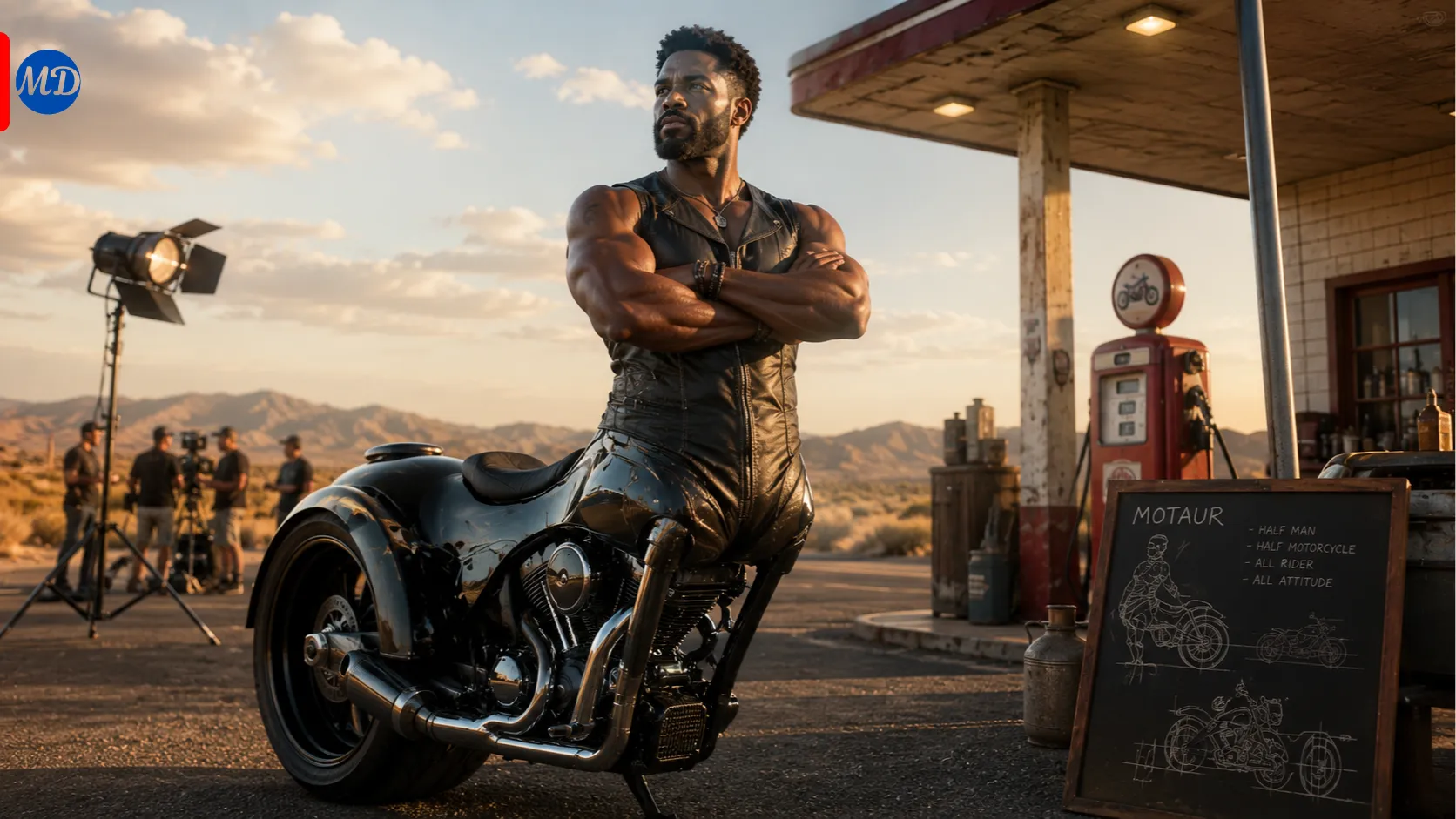
If you have ever watched television in the United States and wondered about that surreal figure who is literally fused with a motorcycle from the waist down, you have encountered Motaur. He is one of the most distinctive advertising characters to emerge from the American insurance industry in recent years, and there is considerably more behind his creation than a strange visual gimmick.
This guide covers everything worth knowing about Motaur: where the character came from, who plays him, how he was made, what the advertising campaign was designed to achieve, and why he resonated with some viewers while dividing opinion among advertising critics.
Motaur is a fictional advertising character created for Progressive Insurance, the American auto and motorcycle insurance company. He is a half-human, half-motorcycle hybrid, drawing explicit inspiration from the centaur of Greek mythology. Where the centaur is half human and half horse, the Motaur replaces the horse with a motorcycle, placing a human torso, arms, and head atop a motorbike body.
The name is a direct portmanteau of “motor” and “centaur,” designed to communicate the character’s dual nature immediately. His pronunciation is MO-TOUR, rhyming with the mythological creature that inspired him.
The character was introduced in 2019 as part of Progressive’s motorcycle insurance advertising campaign and is specifically associated with Progressive’s motorcycle coverage rather than the company’s broader auto insurance products. Motaur is a separate addition to Progressive’s well-established roster of advertising characters, which includes Flo, the long-running white-uniformed saleswoman, and Dr. Rick.
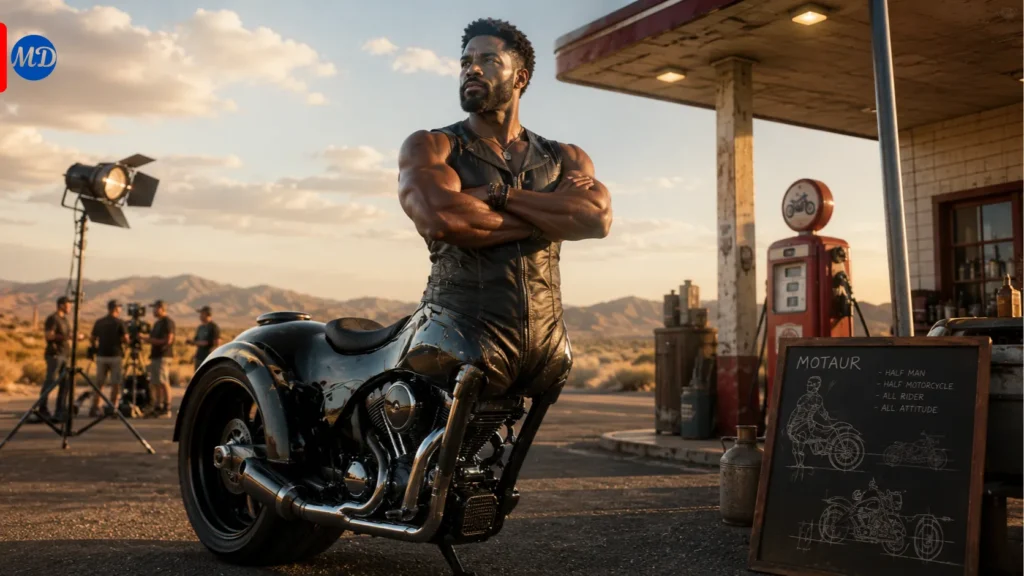
The actor who portrays Motaur is Terrence Terrell. Terrell is an Emmy Award-winning actor, author, musician, and philanthropist originally from Cleveland, Mississippi. He is an alumnus of Mississippi Valley State University, a historically Black college and university (HBCU), and is based in Los Angeles.
Beyond the Progressive campaign, Terrence Terrell has appeared in a range of television productions. His credits include the Amazon series Bosch, HBO’s Room 104, the CW’s Batwoman, and BET+’s The First Wives Club. He won a Daytime Emmy Award for Outstanding Supporting Actor in a Digital Drama Series for his work in Issa Rae’s Giants.
Terrell is also active in mentorship and community work. He serves as Head Mentor for the WACO Theater and “Angels and Warriors” non-profit organization, founded by Tina Knowles Lawson and Richard Lawson, which supports young, underprivileged students pursuing careers in arts and entertainment.
The Motaur character was conceived by Arnold Worldwide, the Boston-based advertising agency that serves as Progressive’s creative partner. The concept emerged from a specific insight about motorcycle riders: that passionate motorcyclists do not simply own or enjoy their bikes, they identify with them deeply. The relationship between a committed rider and their motorcycle is fundamentally different from the relationship between a typical car owner and their vehicle.
Sean McBride, EVP and Executive Creative Director at Arnold Worldwide, explained the thinking behind the character. The Motaur reflects two core truths about serious riders: that they are often misunderstood by non-riders, and that their connection to motorcycling is more like an identity than a hobby. By creating a creature who is literally inseparable from his bike, the campaign made this abstract emotional truth concrete and visual.
The Drum described the campaign, on its launch in May 2019, as “disruptive in all the right ways.” Progressive’s own internal team described Motaur as an “anti-selling ad,” a campaign designed to connect emotionally rather than list product features or promote a price point.
Creating a believable half-man, half-motorcycle figure on screen required significant visual effects work. The production company The Mill was responsible for the VFX. The team developed a custom rig that held the actor, Terrence Terrell, in the correct physical position to simulate his body emerging from the motorcycle frame. Three separate footage plates were then composited together to create the final fused appearance.
The early commercials were directed by Harold Einstein of production company Dummy. Later spots in the campaign were directed by JJ Adler. A separate print and photography campaign was produced with the involvement of Dutch digital photographer Jaap Vliegenthart and production company Taylor James, creating still imagery of the Motaur in dramatic landscape settings.
One early concept considered during development was called the “Centocycle,” which suggests the creative team explored different naming and framing options before settling on Motaur as the character’s identity.
Progressive is the number one motorcycle insurer in the United States, which gives the company a strong strategic reason to invest in motorcycle-specific advertising rather than relying solely on general auto insurance campaigns. Motorcycle riders are a distinct customer community with their own culture, values, and sense of identity. Marketing to them with the same tone used for car insurance would likely miss the mark.
The Motaur campaign was explicitly designed to speak to this audience. As Progressive’s marketing team put it, the character was meant to “celebrate the quiet confidence of an often misunderstood community of thrill-seekers.” The tone of the commercials is dry, understated, and slightly absurdist, which fits how many motorcycle enthusiasts see themselves relative to mainstream culture.
The Motaur spots typically place the character in everyday situations, where his hybrid nature is treated as completely normal by himself and as mildly disorienting by the non-motorcyclists who encounter him. The humor comes from the contrast: Motaur is entirely at ease with what he is, while passersby struggle to process his existence.
In the first and most widely discussed spot, “Do You Mind,” Motaur is at a gas station in the desert. A man in a truck asks him, “Do you mind being a Motaur?” Motaur’s response turns the question back: “What could be better than being a Motaur? Do you mind not being a Motaur?” The truck passenger quietly admits that he does, in fact, mind. The exchange captures the core idea that for a true rider, being human and motorcycle simultaneously would be the highest possible form of existence.
Other commercials have placed Motaur at a gym, listening to music alone in the desert, and in various social situations where his nature becomes the source of gentle comedy.
Grounding the character in the tradition of Greek mythology gave Motaur instant cultural reference points. The centaur is one of the most recognizable figures from ancient mythology, appearing in widely known stories and surviving as a cultural touchstone across literature, art, and film. By transposing this archetype into a modern, mechanical form, the campaign could suggest permanence and iconic status without having to earn it from scratch.
The substitution of motorcycle for horse also works logically. The horse was the primary symbol of freedom, power, and mobility in the ancient world. In the contemporary landscape, the motorcycle serves a comparable function for many riders. The mythological swap is conceptually coherent.
A key aspect of Motaur’s appeal is his complete lack of self-consciousness. He does not apologize for what he is, does not explain himself unnecessarily, and does not seek validation from the humans he encounters. This self-assurance mirrors the quality that many experienced motorcyclists project: a sense that their choice of lifestyle requires no justification to outsiders.
Advertising characters who are confident in their own identity tend to be more durable than those defined by insecurity or self-deprecation. Motaur projects the attitude that being what he is represents the ideal, not a limitation.
By tying Motaur specifically to motorcycle insurance rather than Progressive’s full product range, the campaign avoided the diffusion that affects brand mascots who are asked to represent too many things. Motaur is focused. He is for riders, speaking the language of riders, and his presence in an ad communicates the product’s category instantly.
This specificity is also strategically smart for Progressive, which, as the top motorcycle insurer in the US, has reason to reinforce its dominance in this category rather than simply advertising insurance in general.
Opinion on the Motaur campaign has not been uniformly positive within the advertising industry. Some critics argued that the creative concept, while visually distinctive, prioritized spectacle over clear product communication.
The Cranky Creative blog, which focuses on advertising effectiveness, noted that the character’s visual strangeness risks overshadowing the brand itself. The argument was that viewers could easily remember seeing a bizarre half-man, half-motorcycle figure without connecting the image to Progressive or understanding what the ad was selling. The blog acknowledged that the Progressive name appearing on screen for nearly half the commercial’s runtime mitigated this risk, but maintained that a more direct communication of reasons to buy would have been stronger.
This tension between emotional brand-building and direct response advertising is a long-standing debate in the industry. Motaur sits firmly on the brand-building side: it does not quote prices, list policy features, or issue a clear call to action. Its purpose is to build familiarity, affection, and identification with a brand rather than to drive immediate purchasing decisions.
For Progressive, which already has a strong market position and significant brand recognition through Flo and other characters, this approach may make strategic sense. A company building market share from a weaker position might need to be more direct. A market leader reinforcing category dominance has more room to invest in distinctive, character-driven campaigns.
Progressive has built one of the most recognizable advertising character stables in American insurance over the past two decades. Flo, introduced in 2008 and played by actress Stephanie Courtney, remains one of the most durable advertising personalities in US television history, with over a decade of consistent presence.
Dr. Rick, a parody therapist who helps new homeowners avoid inheriting their parents’ habits, represents a different tonal register: witty, observational, and grounded in a universal life experience.
Motaur occupies a third lane: fantastical, mythologically-inflected, and audience-specific. He does not appear in general Progressive advertising and is not positioned as a universal brand character. His role is categorical, a specialist character for a specialist product line.
This modular approach to mascot deployment reflects a sophisticated understanding of audience segmentation. Different customer groups respond to different creative registers, and Progressive has built a portfolio of characters that can be deployed selectively rather than relying on a single spokesperson to carry all messaging.
“Motaur is the main Progressive mascot.” Motaur is a specialist character for motorcycle insurance advertising. Flo remains Progressive’s primary and most widely recognized brand character for general auto insurance.
“The motorcycle part of Motaur is a costume or prop.” The effect is achieved through visual effects production, specifically a combination of a custom physical rig on set and multi-plate compositing in post-production by The Mill. There is no single costume or prop that creates the effect live on set.
“Motaur is a minor or short-lived campaign.” The character launched in 2019 and has continued to appear in Progressive’s advertising across multiple commercials and settings, making it one of the more sustained character-based campaigns the company has run.
“The name is pronounced MO-TAR or MO-TOR.” The correct pronunciation is MO-TOUR, rhyming with centaur.
The Motaur campaign illustrates several principles that are applicable beyond insurance advertising:
Motaur is a genuinely original advertising character in a category, insurance, not typically associated with creative ambition. He emerged from a real insight about the psychology of motorcycle riders, which was realized through technically demanding visual effects work, and has been sustained across multiple years of advertising by a committed actor in Terrence Terrell.
Whether or not every viewer finds him immediately comprehensible as an insurance pitch, Motaur accomplishes something more valuable for a market leader: he is memorable, he is specific to a clearly defined audience, and he communicates a brand attitude rather than just a product feature. For the motorcycle rider who sees a half-man, half-motorcycle figure presented with total self-confidence, the message is clear. Progressive understands what riding actually means.
What is Motaur? Motaur is a fictional advertising character for Progressive Insurance, specifically for its motorcycle insurance products. He is a half-human, half-motorcycle hybrid inspired by the centaur of Greek mythology. The name combines “motor” and “centaur.” His correct pronunciation is MO-TOUR.
Who plays Motaur in the Progressive commercials? Motaur is played by Terrence Terrell, an Emmy Award-winning actor from Cleveland, Mississippi. He is an HBCU alumnus (Mississippi Valley State University) and has appeared in productions including Bosch, Room 104, Batwoman, and The First Wives Club.
When did Motaur first appear? The Motaur character first appeared in May 2019, when Progressive launched the campaign in collaboration with ad agency Arnold Worldwide.
Who created the Motaur character? The Motaur was conceived by Arnold Worldwide, Progressive’s advertising agency. Sean McBride, EVP and Executive Creative Director at Arnold, has spoken publicly about the character’s development. The visual effects were produced by The Mill.
What is Motaur advertising? Motaur advertises Progressive’s motorcycle insurance products. He is a specialist character for this category and does not appear in Progressive’s general auto insurance advertising.
How was the Motaur visual effect created? The Mill, a visual effects production company, created the Motaur effect using a custom physical rig that positioned the actor correctly on set, followed by compositing three separate footage plates to fuse the human and motorcycle elements. Later commercials were directed by JJ Adler.
What is the creative strategy behind Motaur? The campaign was designed as an “anti-selling ad,” building emotional connection with motorcycle riders rather than directly promoting policy features or prices. It draws on the insight that serious riders identify deeply with their motorcycles, viewing the relationship as part of their identity. Progressive described it as a way to “celebrate the quiet confidence of an often misunderstood community.”
Is Motaur related to Flo? Both Motaur and Flo are Progressive advertising characters, but they serve different purposes. Flo is the company’s long-running primary brand ambassador for general auto insurance. Motaur is a specialist character used specifically for motorcycle insurance promotions.
What does the word “Motaur” mean? Motaur is a portmanteau of “motor” and “centaur.” It describes a creature that is half human, half motorcycle, in the same way the mythological centaur is half human, half horse.





[…] Read More: Motaur: Everything You Need to Know About Progressive Insurance’s Half-Man, Half-Motorcycle Charac… […]